Stilo, Donald L., transcription, translation, and annotation. Vafsi Folk Tales: Twenty Four Tales in the Gurchani Dialect of Vafsi as Narrated by Ghazanfar Mahmudi and Mashdi Mahdi and Collected by Lawrence P. Elwell-Sutton.(Book review)
Publication: Asian Folklore Studies
Publication Date: 01-APR-07
Author: Markus-Takeshita, Kinga
STILO, DONALD L., transcription, translation, and annotation. Vafsi Folk Tales: Twenty Four Tales in the Gurchani Dialect of Vafsi as Narrated by Ghazanfar Mahmudi and Mashdi Mahdi and Collected by Lawrence P. Elwell-Sutton. Supplied with folklorist notes and edited by Ulrich Marzolph. Beitrage zur Iranisti k Band 25. Wiesbaden: Dr. Ludwig Reichert Verlag, 2004. viii + 288 pages. Grammar notes, glossary, bibliography. Cloth 88.00 [euro]; ISBN 3-89500-423-5. With two CDS.
This book is an important contribution to Iranian folklore and dialectology that contains twenty-four oral tales in Vafsi, a little-known unwritten northwestern Iranian language, with their English translations. The materials were collected in August 1958 in west-central Iran by the late Professor L. P. Elwell-Sutton, the distinguished British Iranist (1912-1984) who recorded the Vafsi texts and their Persian translations from two native speakers on a reel-to-reel tape recorder. Elwell-Sutton later transcribed and researched the materials, but they remained unpublished in his lifetime. It is due to the efforts of Dr. Ulrich Marzolph, one of the most outstanding contemporary experts on Middle Eastern folk literature, that these unique oral texts have now become available to us. (1)
D. L. Stilo, an American expert on the Vafsi language, was engaged for the project through a grant from the Deutsche Forschungsgemeinschaft. Stilo reworked and computerized Elwell-Sutton's original tape recordings and transcriptions and made a detailed linguistic analysis. As new fieldwork was not possible due to political circumstances, a Vafsi speaker was invited to Germany and consulted in order to achieve more accuracy in the transcription and interpretation of the materials.
The main body of the book is divided into four parts. The Introduction (1-23) contains a short summary of the Vafsi that is spoken in four villages in west central Iran, namely in Vafs, Chehreqan, Gurchan, and Fark. The language of the tale texts is defined as the Gurchani dialect of Vafsi. This part also contains information on the original storytellers and on the recording process. Two villagers, the sixteen-year-old Ghazanfar Mahmudi (speaker A) and the approximately sixty-year-old Mashdi Mahdi (speaker B) were narrating in Vafsi for about 228 minutes, and also gave an approximate and spontaneous translation in Persian. As the recording time ran approximately four hours each, they took turns narrating. The history of the project, methodology, and procedures concerning the corrections of Elwell-Sutton's original transcription and criteria regarding the translation of the texts are also discussed in this part.
At the core of the book lie the tale texts that are presented in Stilo's phonetic transcriptions alongside their English translations (26-197). They unmistakably belong to the typical stock of Middle Eastern tales and correspond with many internationally known types and motifs of folk tales. They include animal tales (nos. A6, A10), tales of magic (nos. A11, B8, B10, B 12), religious legends about the Prophet Moses (nos. B7, B9), novella tales (no. B 11), with a good deal of them featuring well-known tricksters, such as the Mulla Nasreddin (nos. A1, A5, B4), the thin-bearded one (kose: no. B1), and the bald one (kacal: no. A 9). There are also stories concerning fools (nos. A7, B3), the vileness of women (nos.A3, B2, B5), and formula tales (nos. A2, A4). Annotations (199-222) consist of a great number of grammatical interpretations of the texts by Stilo and the learned concise folkloristic notes by Marzolph. These latter are of particular interest for the folklorist reader since they contain the classification of each tale text according to AARNE and THOMPSON (1964), MARZOLPH (1984), and THOMPSON (1955-1958), and also contain some additional bibliographical references.
Readers who would welcome further information concerning Iranian folktales and storytellers should consult the relevant articles of the late Elwell-Sutton himself, who published on these topics in various journals between the 1970s and the early 1980s. (2)
The Grammar Notes (223-44) include the morphology and syntax of Vafsi in a nutshell. (More detailed discussion is promised to come to light in Stilo's planned Grammar of Vafsi.) The Glossary (245-86) and a short Bibliography (287-88) conclude the book. Two compact discs of the audio recordings of the original Vafsi texts accompany the volume.
This careful study adds to our understanding of the linguistic diversity of Iran with its array of local languages, many of which exist only orally and have a dwindling number of speakers, and where Persian (i.e., Farsi, itself a Southwestern Iranian language) functions as the language of administration, communication, and literacy.
Nevertheless, the insertion of a short summary on the major languages spoken in Iran in general and on the various members of Iranian language family in particular might have been helpful for the non-Iranist readers.
REFERENCES CITED
AARNE, Antti, and Stith THOMPSON, ed. & trans. 1964 The Types of the Folktale. FFC 184. Helsinki. Academia Scientiarum Fennica.
MARKUS-TAKESHITA, Kinga 1995 Review of MARZOLPH and AMIRHOSSEINI-NITHAMMER, eds. Asian Folklore Studies 54: 353-55.
MARZOLPH, Ulrich 1984 Typologie des persischen Volksmarchens. Beiruter Texte und Studien 31. Beirut-Wiesbaden: Franz Steiner Verlag.
MARZOLPH, Ulrich, and Azar AMIRHOSSEINI-NITHAMMER, eds. 1994 Die Erziahlungen der Masdi Galin Hanom. Gesammelt von L.P. Elwell-Sutton. Wiesbaden: Dr. Ludwig Reichert Verlag. 1994. 2 volumes (Vol. 1. Persian texts. Vol. 2. German companion volume with introduction and notes on narrators and the typology of the tales.)
THOMPSON, Stith 1955-1958 Motif-index of Folk-Literature. 6 volumes. Bloomington: Indiana University Press.
NOTES
(1.) Marzolph has done much to preserve the folkloristic legacy of Elwell-Sutton. He edited and supplied linguistical and folkloristic comments for the original texts of the tales of Mashdi Galin Khanum, an earlier collection of Elwell-Sutton from a gifted woman storyteller in Tehran, which is dated back to the years of the years 1943-1947 (MARZOLPH and AMIRHOSSEINI-NITHAMMER, eds. 1994; reviewed in this journal by MARKUS-TAKESHITA 1995).
(2.) For more references on Elwell-Sutton's works on Iranian folklore studies the bibliographical references in MARZOLPH (1984, 310) and in the edition of Mashdi Galin Khanum (MARZOLPH, AMIRHOSSEINI, NITHAMMER, AZAR 1994, vol.1.7) can be consulted.
Kinga MARKUS-TAKESHITA
Sagamihara City
Kanagawa, Japan
COPYRIGHT 2007 Asian Folklore Studies
Source
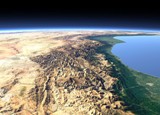 Tats
of Iran are an Iranian people, very limited and Sporadic living near Alborz
Mountains in Iran, especially in the south of Qazvin province.
Tats
of Iran are an Iranian people, very limited and Sporadic living near Alborz
Mountains in Iran, especially in the south of Qazvin province.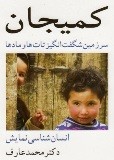 عارف درباره اثر پژوهشی خود گفت: این كتاب
به آیینهای سنتی و کهن کمیجان، یکی از شهرستانهای استان مرکزی میپردازد که در حوزههای
مختلف انسانشناسی، نشان از پیشینه تاریخی این منطقه و اتصال تاریخی آنها به مادها
و تاتها دارد.
عارف درباره اثر پژوهشی خود گفت: این كتاب
به آیینهای سنتی و کهن کمیجان، یکی از شهرستانهای استان مرکزی میپردازد که در حوزههای
مختلف انسانشناسی، نشان از پیشینه تاریخی این منطقه و اتصال تاریخی آنها به مادها
و تاتها دارد. فرفَ بوران اَرکره


 سرپرست اداره كل میراث فرهنگی، صنایع
دستی و گردشگری استان مركزی گفت: پرونده 22 اثر تاریخی، طبیعی و معنوی این استان
با اعتبار یك میلیارد و 270 میلیون ریال به پنجمین اجلاس شورای سیاستگذاری ثبت
آثار ملی ایران پیشنهاد شده است.
سرپرست اداره كل میراث فرهنگی، صنایع
دستی و گردشگری استان مركزی گفت: پرونده 22 اثر تاریخی، طبیعی و معنوی این استان
با اعتبار یك میلیارد و 270 میلیون ریال به پنجمین اجلاس شورای سیاستگذاری ثبت
آثار ملی ایران پیشنهاد شده است.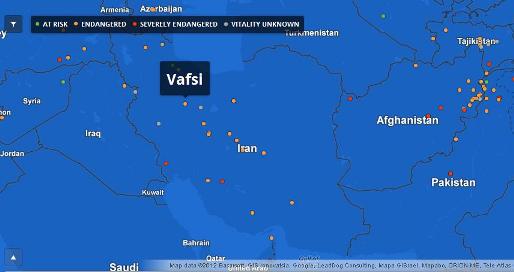

 The
exact linguistic affiliation of Vafsi is under question. While it has been classified
as belonging to the Tatic group [STILO, 1981], particularly closely related to
the Southern Tati Dialects [YAR-SHATER], other researchers see Vafsi possibly
as a Central Plateau dialect [MORGENSTIERNE: 172]; LECOQ [1989: 313] considers
Vafsi, and the other dialects of the Tafresh area, to have many grammatical
traits in common with the Central Plateau dialects but the vocabulary of this
group to be more similar to Tati dialects.
The
exact linguistic affiliation of Vafsi is under question. While it has been classified
as belonging to the Tatic group [STILO, 1981], particularly closely related to
the Southern Tati Dialects [YAR-SHATER], other researchers see Vafsi possibly
as a Central Plateau dialect [MORGENSTIERNE: 172]; LECOQ [1989: 313] considers
Vafsi, and the other dialects of the Tafresh area, to have many grammatical
traits in common with the Central Plateau dialects but the vocabulary of this
group to be more similar to Tati dialects.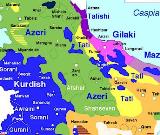 تاتهای ایران از اقوام ایرانیتبار هستند
که به شکل پراکنده و نقطهای در پیرامون رشتهکوه البرز و [زاگرس] در ایران، زندگی
میکنند. بیشتر جمعیت تاتهای ایران در نیمه ی جنوبی استان قزوین یعنی شهرستانهای
تاکستان و بوئینزهرا استقرار دارند.
تاتهای ایران از اقوام ایرانیتبار هستند
که به شکل پراکنده و نقطهای در پیرامون رشتهکوه البرز و [زاگرس] در ایران، زندگی
میکنند. بیشتر جمعیت تاتهای ایران در نیمه ی جنوبی استان قزوین یعنی شهرستانهای
تاکستان و بوئینزهرا استقرار دارند. سیداحمد وکیلیان از کهنه کارهای فولکلور و ادبیات عامه است. او که هم اکنون مدیر مسئول فصلنامه فرهنگ مردم است، طی سالیان دراز صدها مقاله و یادداشت در نشریات گوناگون پیرامون فرهنگ عامه مناطق مختلف ایران به چاپ رسانده و در این زمینه تحقیقات فراوانی انجام داده است. آقای وکیلیان که از دوستان نزدیک دکتر اولریش مارزلف نیز هست در هر دو کتاب حاوی قصه های وفسی یعنی "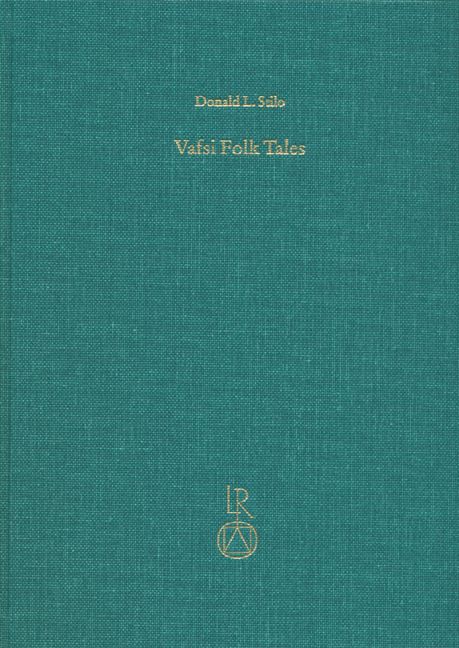
 سئوال فوق رو دوست خوبمون "علی،ح" در نظرخواهی مطلب قبل
پرسیده... خواستم ذیل همون نظر جواب بدم، دیدم حجمش زیاد شد و شاید برای دوستان
دیگه هم جالب باشه، بهتر دیدم به عنوان ی مطلب مستقل تو وبلاگ بنویسم.
سئوال فوق رو دوست خوبمون "علی،ح" در نظرخواهی مطلب قبل
پرسیده... خواستم ذیل همون نظر جواب بدم، دیدم حجمش زیاد شد و شاید برای دوستان
دیگه هم جالب باشه، بهتر دیدم به عنوان ی مطلب مستقل تو وبلاگ بنویسم. مقاله ای با عنوان "واژههای فارسی میانه در گویشهای وفسی و چهرقانی"
توسط دکتر علیرضا
مقاله ای با عنوان "واژههای فارسی میانه در گویشهای وفسی و چهرقانی"
توسط دکتر علیرضا 

 در
در  رضا شمس کلائی در وبلاگ خود به ذکر کلمات کاربردی
گویش قدیمی اراک پرداخته است. او کلمه "اَرْسْ" را
رضا شمس کلائی در وبلاگ خود به ذکر کلمات کاربردی
گویش قدیمی اراک پرداخته است. او کلمه "اَرْسْ" را  پایان نامه
با موضوع "بررسی و تحلیل نظام حالت ارگتیو در گویش وفسی در چارچوب نظریه بهینگی"
توسط آقای "سعیدرضا یوسفی" و تحت راهنمایی "
پایان نامه
با موضوع "بررسی و تحلیل نظام حالت ارگتیو در گویش وفسی در چارچوب نظریه بهینگی"
توسط آقای "سعیدرضا یوسفی" و تحت راهنمایی " دو سال قبل،
یک
دو سال قبل،
یک 
 پنجاه
و یک سال قبل، پژوهشگر و ایرانشناس انگلیسی، پروفسور الول ساتن، نخستین مقاله به
زبان انگلیسی را در مورد گویش وفسی نوشت. عنوان این مقاله که برای اولین بار در
کنفرانس مسکو ارائه شد "The Vafsi Dialect (North-Western Persia)"، بود. این
مقاله، دو سه دهه بعد از آن نیز در مجلات گوناگونی به چاپ رسید و مورد توجه
زبانشناسان ایرانی و خارجی قرار گرفت. همچنین این مقاله یکی از منابعی بود که
پروفسور دونالد استیلو برای تحقیق بر روی گویش وفسی از آن سود برد.
پنجاه
و یک سال قبل، پژوهشگر و ایرانشناس انگلیسی، پروفسور الول ساتن، نخستین مقاله به
زبان انگلیسی را در مورد گویش وفسی نوشت. عنوان این مقاله که برای اولین بار در
کنفرانس مسکو ارائه شد "The Vafsi Dialect (North-Western Persia)"، بود. این
مقاله، دو سه دهه بعد از آن نیز در مجلات گوناگونی به چاپ رسید و مورد توجه
زبانشناسان ایرانی و خارجی قرار گرفت. همچنین این مقاله یکی از منابعی بود که
پروفسور دونالد استیلو برای تحقیق بر روی گویش وفسی از آن سود برد.


 نخستین پرسش اینست كه از دیدگاه زبان شناسان و پژوهشگران، زبان وفسی جزو كدام دسته از
